FIREWISE PROJECTS
This page highlights fire hazard reduction efforts in three categories:
- Individual Parcel Improvements … made by property owners
- Community Parcel Improvements … typically under WACC leadership
- West Shore Project … on lands to our south
Individual Parcel Improvements
Lake Almanor West property owners are obligated by state law (PRC 4291) and by local CC&Rs to maintain their parcels in a fire-resistant condition. Doing so involves annual cleanup of natural debris that is deposited by our trees and other vegetation, as well as occasional tree thinning and limbing. These important tasks are undertaken by individual property owners and are not usually part of our formal Firewise projects. However, all of those individual efforts DO count towards our required annual financial or volunteer time investment in community fire safety work. Just submit your annual total hours and expenditures as described on the Special Notices page.
Community Parcel Projects
Over the years a number of community-owned parcels have been the focus of major efforts to thin trees and vegetation, remove dense understory materials, and remove the lower branches of trees. An overview of those locations is found in the map below, and some before-and-after photographs of selected project areas follow.
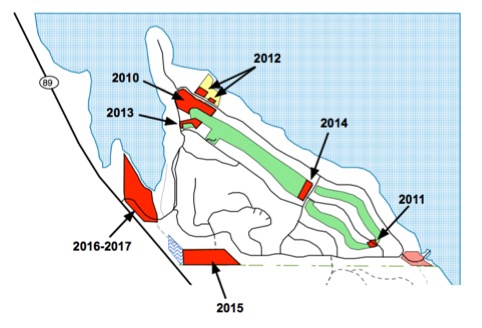
In addition to the projects depicted, PG&E did some welcome thinning of trees on its shoreline property at the boat ramp and along the greenbelt at the entrance. Major tree removals also took place on community and residential parcels following the 2021 Dixie Fire.
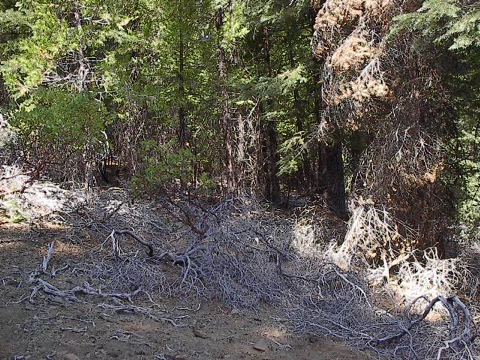
Osprey Loop Greenbelt Project
(ridge top area, looking north):Before Cleanup (extensive fuel ladders)
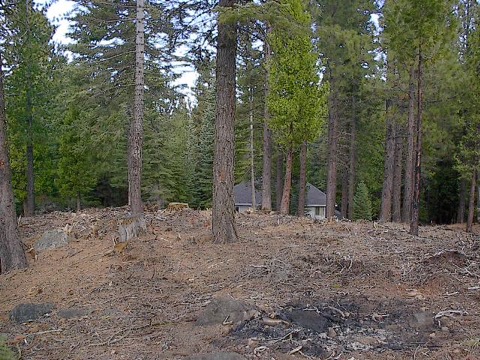
After Cleanup (… yes, the house was there all the time!)
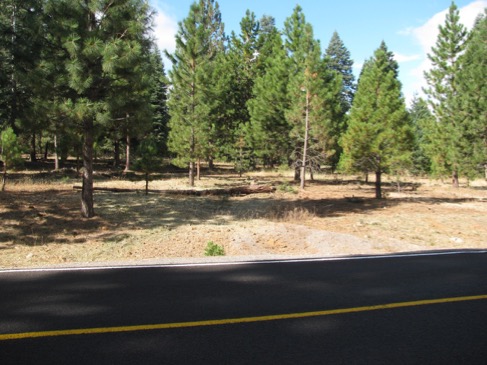
Lake Almanor West Drive Project
(across from the Rec Area):Before Cleanup
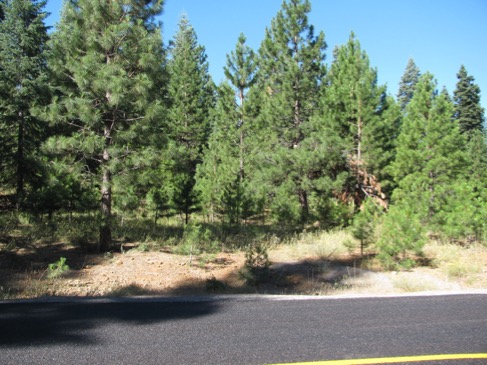
After Cleanup
Recreation Area Project:
Before Cleanup
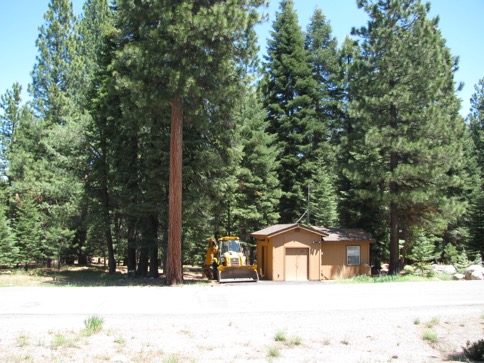
After Cleanup
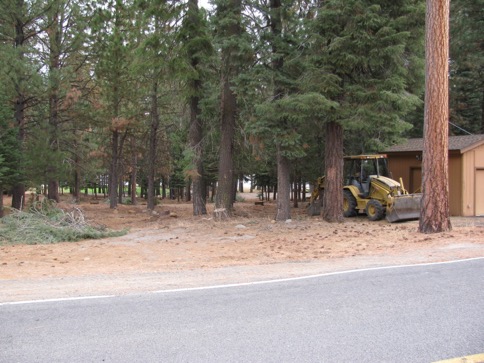
West Shore Project
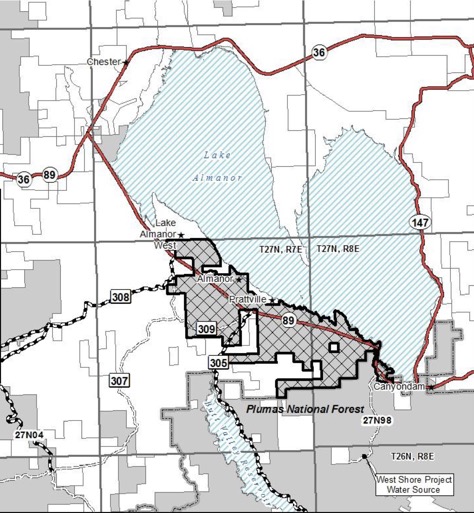
The West Shore Fire Department and WACC have been lobbying Lassen National Forest (LNF) for a number of years, requesting that a swath of National Forest immediately south of the development be thinned and cleaned up as a shaded fuel break. Such work was actually done there around 1989, but with time new growth emerged and considerable tree mortality led to a gradual increase in hazardous fuel conditions. What began as a modest requested effort on a small area evolved into a much larger project involving the entire west shore between Lake Almanor West and the Forest Service boat launch facility at the south end of the lake. Multiple participants became involved in what is now known as the "West Shore Project", a multi-year effort covering something in excess of 6,000 acres. Public review of an Environmental Assessment took place during 2020, but the project was not finalized and no actual work on the ground took place before the COVID pandemic arrived, followed by the Dixie Fire.
A fraction of the proposed project area was burned by Dixie, but the majority of the area was left untouched. The West Shore Fire Department therefore sent a letter to the Lassen National Forest Supervisor shortly after the Dixie Fire, urging USFS to continue with the project without delay. In late December of 2021, the Lassen National Forest Supervisor issued a Decision Notice indicating that the planned activity would indeed go forward on the project area (see map below), but no specific timeframe was given. Even though the area nearest Lake Almanor West burned during the Dixie Fire, it continues to be a fire hazard concern due to the presence of large amounts of standing and down dead trees. Dead tree cutting in that are began in early 2023. For further information on the West Shore Project, go to the LNF webpage at https://www.fs.usda.gov/project/?project=56312 .